
Jeff Christianson
Broker Associate · eXp Realty · July 28, 2026
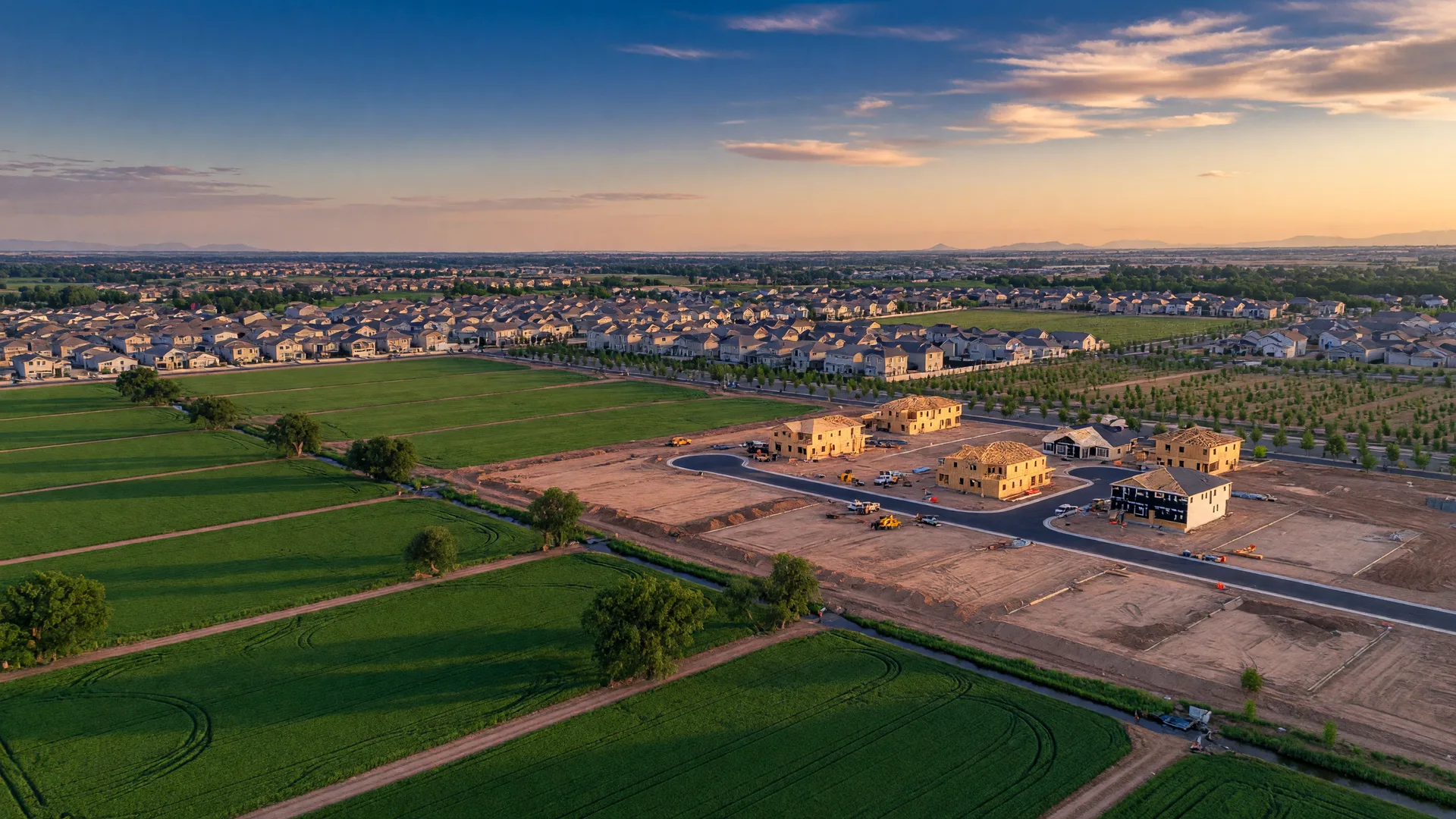
The Treasure Valley is growing faster than almost any region in the Intermountain West. From Boise to Nampa, new subdivisions are taking shape, commercial corridors are expanding, and the demand for land continues to push prices higher. For buyers who are looking beyond the traditional single-family home, acreage properties with development potential represent one of the most interesting opportunities in the market today.
Across Ada and Canyon Counties, the story is one of steady, sustained growth. Home sales in the Treasure Valley rose 7.2 percent in 2025, reaching 11,702 units. Commercial land prices in Canyon County surged to $716,473 per acre in the fourth quarter of 2025. Residential lot development in Ada County accelerated, with nearly 3,000 new lots recorded in the past year alone. These numbers tell a clear story: the Treasure Valley is absorbing more people, and that growth creates value for landowners who hold property in the path of development.
What Makes Acreage Valuable for Development
Not every acreage property has development potential. The key factors that determine whether a parcel might be ripe for future subdivision or rezoning include location, zoning, access to utilities, and the surrounding development pattern. Properties near major corridors, existing infrastructure, or areas already transitioning to higher density tend to hold the most upside.
In Nampa, for example, the Highway 16 corridor is shaping up to be a major development catalyst. The SH-16 Corridor Specific Area Plan is already guiding design and infrastructure planning along this route through eastern Nampa. Major projects like East Ranch (134 acres, 363 single-family homes plus multifamily and commercial) and East Canyon (400 acres with 288 acres designated for single-family homes) show that the development pipeline in this part of the Treasure Valley is active and growing.
Just north of Nampa, the Highline Subdivision was approved in June 2026, adding 355 homes on 94 acres near Ridgevue High School. These projects are part of a broader trend: Canyon County approved an expansion of Nampa's area of impact by roughly 2,600 acres in 2023, most of it between Midway Road and Deer Flat National Wildlife Refuge, signaling that the city expects to keep growing outward for years to come.
How Boise, Meridian, Eagle, Kuna, and Nampa Compare
Each city in the Treasure Valley offers a different profile for acreage buyers:
- Boise: The urban core and North End offer limited acreage at premium prices. Most development land is infill or on the Bench and Foothills, where environmental constraints and zoning limit density. Acreage here is scarce and commands top dollar.
- Meridian: Rapidly built out with master-planned subdivisions. Few large parcels remain. Meridian's growth has pushed buyers toward nearby Star and Kuna for more space at better price points.
- Eagle: Known for luxury estate lots on larger parcels, especially in the Bench and river corridor areas. Eagle acreage tends to trade at a premium and is often purchased for custom home sites rather than development plays.
- Kuna: One of the Treasure Valley's last affordable frontiers for acreage. Kuna is attracting buyers priced out of Meridian and South Boise, with several new subdivisions under construction and more in the pipeline. Acreage here still offers relative value.
- Nampa: The sweet spot for development-oriented acreage buyers. With the Highway 16 expansion, multiple approved subdivisions, and Rural Residential zoning on large tracts near the city's edge, Nampa combines availability, pricing, and long-term appreciation potential that is harder to find in Ada County.
A Case Study: 79 N Robinson Rd, Nampa
To see what development-minded acreage looks like in practice, consider 79 N Robinson Rd in east Nampa. This 6-acre property is currently zoned Rural Residential (RR) with a 2-acre minimum lot size, meaning it could potentially accommodate up to three separate lots under current zoning rules. But what makes it especially interesting is what happened next door: the neighboring property was rezoned to R-1 in 2023.
Rezoning a neighboring parcel to a higher-density residential designation is a strong signal that the area is being considered for more intensive development. When one property transitions from RR to R-1, it sets a precedent that can influence future zoning decisions on adjacent parcels. While any rezoning of 79 N Robinson Rd would require City and County approvals, the pattern of development in east Nampa makes the long-term trajectory worth watching.
Beyond the development angle, the property already delivers immediate value. The updated 2,212 SF main home is move-in ready with new HVAC, roof, windows, and electrical. A 500 SF guest house generates $1,000 per month in rental income on its own septic system. Two shops totaling nearly 5,000 SF provide workshop space for a business, hobby, or equipment storage. And 6 acres of irrigation rights through the Nampa Meridian Irrigation District keep the pasture green through the growing season.
That combination of current income and future upside is rare. Most properties offer one or the other. Robinson Rd offers both.
What to Look for When Evaluating Development Potential
If you are considering an acreage purchase with an eye toward future development, here are the factors that matter most:
- Current zoning and minimum lot size: Rural Residential zones with 1- to 5-acre minimums leave room for future lot splits. Verify the exact minimum for the parcel.
- Adjacent rezoning activity: When neighboring properties have already moved to higher density, it establishes a pattern that can support your own application down the road.
- Utility access: Properties near existing water, sewer, and power infrastructure are far more likely to qualify for rezoning than remote parcels that require expensive utility extensions.
- Road frontage and access: Parcels with direct access to arterial or collector roads are far more attractive to developers than flag lots or properties on narrow rural lanes.
- Irrigation rights: In the Treasure Valley, water access is a major asset. Properties with irrigation district rights retain agricultural value and flexibility while awaiting future development.
- Surrounding land use: A parcel surrounded by existing subdivisions or commercial development is a stronger candidate for rezoning than one surrounded by other large agricultural tracts.
- Area impact and city planning: Check whether the property falls within a city's area of impact or a specific area plan. Properties within these boundaries are far more likely to see infrastructure investment.
The Bigger Picture: Why Acreage Buyers Are Winning
The Treasure Valley is in the middle of a long-term growth cycle. Population continues to increase, housing supply is working to catch up, and the region's economy remains one of the strongest in the West. For buyers who have the flexibility to purchase acreage rather than a standard subdivision lot, the advantages go beyond square footage and privacy.
Acreage gives you optionality. You can hold it and enjoy the space while the surrounding area develops. You can generate income from a guest house or shop rental. You can pursue rezoning when the time is right. And if development never comes, you still own a piece of the Treasure Valley with room to live, work, and play on your own terms.
As land becomes scarcer and more expensive across Boise, Meridian, Eagle, Kuna, and Nampa, the value of acreage with development potential is only going to grow. The buyers who recognize that today are positioning themselves well for tomorrow.
Whether you are looking for a property with current rental income, shop space for a business, or land with long-term appreciation potential, I am happy to help you explore what is available across the Treasure Valley. With over 25 years of experience in the Idaho real estate market, I know the neighborhoods, the zoning patterns, and the opportunities that make sense for your goals.