
Jeff Christianson
Broker Associate · eXp Realty · August 2, 2026
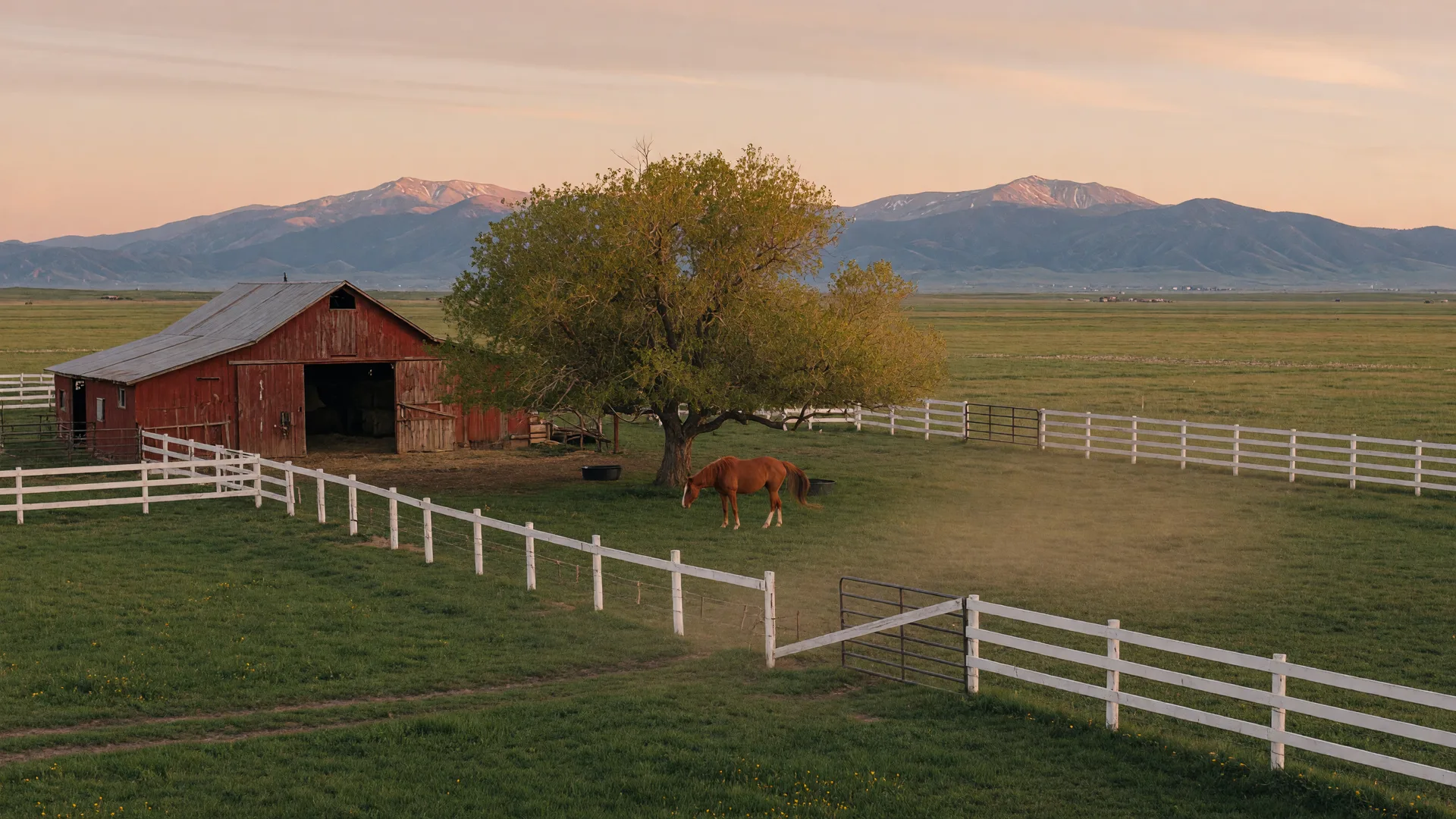
If you are looking for horse property in the Treasure Valley, you are in good company. Canyon County has a deep equestrian culture, and the area around Nampa offers some of the best options for buyers who want acreage and room to ride without being hours from town. Whether you are a first-time horse owner or a seasoned rider relocating to Idaho, knowing what to look for makes all the difference.
79 N Robinson Rd is a great example of what a well-configured horse property looks like. The 6-acre parcel includes approximately 3 acres of pasture with irrigation rights through the Nampa Meridian Irrigation District. That is enough space to keep horses comfortably while still having room for the oversized shops, a guest house, and room to roam. But every property is different, and the checklist below will help you evaluate any horse property you consider.
Start with Zoning: Can You Keep Horses Here?
Before you fall in love with a property, confirm that the zoning allows horses. In Canyon County, the Agricultural (A) Zone and Rural Residential (RR) zones generally permit livestock. The property at 79 N Robinson Rd is zoned Rural Residential with a 2-acre minimum lot size, which comfortably accommodates horses. Canyon County uses an animal unit system that allows up to 2 horses per acre, so a 6-acre parcel provides plenty of room under the code.
Some important zoning rules to keep in mind: buildings must be set back at least 50 feet from major collector roads, and livestock running at large is prohibited, so adequate fencing is required. If you are looking at properties inside city limits, check the city's municipal code too, since urban zones often have stricter animal limits or prohibit horses entirely.
The rule of thumb is at least 2 acres of pasture per horse for rotational grazing, though supplemental feeding is common in Idaho's climate. The 3 acres of pasture at 79 N Robinson Rd, supported by 6 acres of irrigation rights through the Nampa Meridian Irrigation District, provide excellent grass-growing capability through the warmer months.
Irrigation rights are a significant asset in the Treasure Valley. Without them, pasture turns brown by midsummer and hay costs add up quickly. Properties with irrigation district access can keep their fields green and productive, which directly reduces your feed bill and keeps your horses healthier on fresh grass.
Fencing: What Works and What Does Not
Safe, secure fencing is non-negotiable for horse property. Canyon County code requires that livestock be properly confined, so your fence is both a safety measure and a legal requirement. The best options for horses include:
- Wood plank fencing (typically 4- or 5-rail): Classic, visible, and strong. Higher maintenance but very safe.
- Vinyl or composite rail: Low maintenance and horse-safe, but more expensive upfront.
- High-tensile smooth wire with electric tape: Affordable and effective, but requires proper training and maintenance.
- No-climb horse mesh: Excellent for smaller paddocks where horses are likely to paw or test the fence.
Barbed wire is not recommended for horses. It causes serious injuries. If a property has barbed wire fencing, budget to replace it with horse-safe alternatives. Walk the entire fence line before buying, and check for gaps, sagging sections, and areas where a horse could get a hoof caught.
Water Access
Horses need 5 to 10 gallons of water per day, more in hot weather or during work. The property's water source matters. At 79 N Robinson Rd, both homes share a private well that serves the main house and guest cottage. For the pasture, confirm that there is a frost-free hydrant or a way to run water to paddocks in winter, when Idaho temperatures regularly drop below freezing.
If a property relies on a shared well, verify the well's flow rate and whether it can handle the combined demand of household use, irrigation, and livestock. Automatic waterers with freeze protection are a worthwhile upgrade for any Idaho horse property.
Proximity to Equestrian Facilities and Trails
One of the advantages of Nampa and Canyon County is the number of equestrian resources nearby. Within a short drive of 79 N Robinson Rd:
- Burk Equestrian (Kuna): Full-service boarding, training, and lesson facility at 9101 S Black Cat Rd.
- Two Mountain Ranch (Nampa): Boarding and training on 2517 E Lewis Ln with trail access.
- Black Cat Stables (Kuna): Riding lessons and boarding at 9101 S Black Cat Rd.
For trail riding, the Treasure Valley offers excellent public land access. Celebration Park in Canyon County has over 700 acres along the Snake River open to horseback riding. The Snake River Birds of Prey National Conservation Area (BLM-managed) is open to equestrian use. Jump Creek Recreation Area and the Owyhee River Wilderness are within a reasonable trailer ride from Nampa, offering hundreds of miles of backcountry trails. Several boarding facilities also advertise access to hundreds of miles of BLM land directly from their properties.
The Rural Residential Advantage
One of the best things about horse properties in Nampa's Rural Residential zones is the combination of space and convenience. You are not out in the middle of nowhere. 79 N Robinson Rd is about 10 minutes from Nampa's shopping and dining, 20 minutes from downtown Boise, and close to I-84 for easy commuting. You can have horses in the pasture and still be at a Boise State game by kickoff.
There is no HOA telling you how many horses you can keep. The Rural Residential zoning gives you the freedom to use your land the way you want, within county guidelines. That flexibility is increasingly rare in the Treasure Valley as new subdivisions with strict covenants continue to fill in.
What to Budget Beyond the Purchase Price
If you are new to horse property ownership, factor in these ongoing costs:
- Hay and feed: Idaho hay prices vary by season, but expect to budget for supplemental feeding, especially in winter when pasture is dormant.
- Fencing maintenance: Wood fences need periodic painting or replacement. Wire fences need tensioning. Budget for annual upkeep.
- Well and irrigation system upkeep: Pumps fail, irrigation lines need winterizing, and water rights require annual filing in some districts.
- Manure management: Composting, spreading, or removal services are a regular expense for any horse property.
The Bottom Line
Buying horse property in the Treasure Valley is an investment in a lifestyle. The right property gives you room to keep your horses at home, access to some of the best trail riding in the Intermountain West, and the peace of mind that comes with owning land that supports your passion.
Properties like 79 N Robinson Rd show what is possible when you combine acreage, irrigation, and a great location in Nampa. But every buyer's needs are different. If you are looking for horse property in the Treasure Valley, I would love to help you find the right fit.
With over 25 years of experience in Idaho real estate and a deep knowledge of Canyon County zoning, water rights, and equestrian properties, I can help you evaluate what is out there and make a confident decision.